
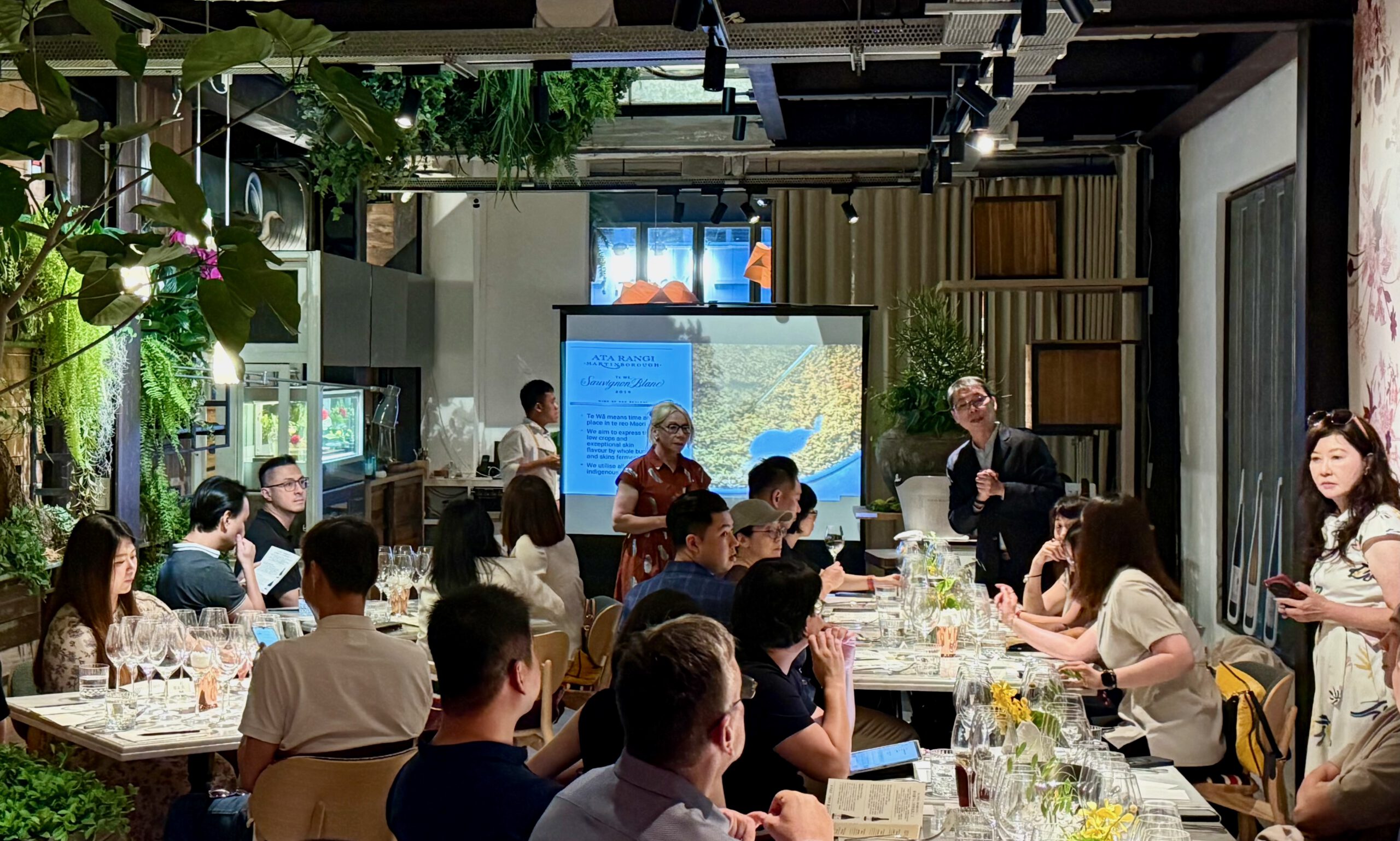
很榮幸在此次餐酒會與著名釀酒師 Helen Masters 一同品嚐Ata Rangi 的白蘇維儂和黑皮諾。這六款酒產於紐西蘭北島最南端的 Martinborough,以生產高品質新世界風格的黑皮諾聞名於世界。此處黑皮諾帶清新豐沛的紫羅蘭、櫻桃等花果香、柔和細緻的單寧和草本、香料味與釀造過程中增添的乳製品香氣和香草等風味,慢慢發展出出皮革、野味氣息。黑皮諾是眾所週知難應付的葡萄品種,對生長環境極為挑惕敏感,
早開花與早熟的特性使她適合冷涼氣候,溫暖的環境會使得葡萄成熟過快而失去特殊迷人的細緻紫羅蘭、覆盆子、野莓等香氣,但是日照不足或者生長季溫度過低,葡萄不夠成熟則口感酸澀且酒體單薄、氣味平淡。因此在溫帶大陸性氣候的布根地,葡萄園的坡度與面向常常是生產成熟度高的葡萄的關鍵。相較之下,新世界產區大多緯度較低且陽光充足,因此黑皮諾的成熟度通常不是問題,反之特殊地理環境所提供可有效提升日夜溫差的冷涼條件,比如海洋、高海拔、冷風、霧氣等,才是新世界產區高品質黑皮諾的要件。Martinborough 擁有在新世界產區相對高的緯度與從庫克海峽來的強風,造就適合黑皮諾生長的冷涼環境。加上他們斟酌氣候與土壤等地理因素,選擇特殊品系適合當地海洋性氣候的黑皮諾,並且依據每年不同天氣狀況,調整整串葡萄發酵的比例,以釀造具柔美單寧、清新酸度等高結構感和豐富花果香的代表性黑皮諾。 Helen 説,整串葡萄發酵溫度上升較慢,因此不必控溫,符合她一貫低人工干預兼具環保概念的釀酒哲學。兩款風格截然不同的白蘇維儂也十分搶眼,應對不同天候,Helen 採取不同釀造方式。2019為低產量年份,以大量萃取高品質成熟的酚類物質、部分橡木桶與不鏽鋼桶發酵創造出高複雜度 (苦檸檬、gooseberry、薄荷、煙燻、烘烤、燧石和杏仁)的風味。2024年擁有生長季溫暖乾燥且日夜屋差大的完美氣候,造就濃郁青椒、芭樂風味的紐西蘭經典白蘇維儂。

Wine List
- Te Wā Sauvignon Blanc 2024
- Te Wā Sauvignon Blanc 2019
- Crimson Pinot Noir 2023
- Ata Rangi Pinot Noir 2018
- Kotinga Vineyard Pinot Noir 2020
- McCrone Vineyard Pinot Noir 2020
1. Te Wā Sauvignon Blanc 2024
Soils: stony, alluvial gravels
Colour: pale lemin-green
Nose: pronounced intensity of guava, leafy, minty, green bell pepper, apricot,
Palate: high and fresh acidity, medium alcohol (13.4%), medium body, pronounced flavours of guava. mint, green bell pepper, stony, creamy notes from malolactic conversion, hints of lees with smooth texture and medium(+) finish of guava, green bell pepper, creamy notes and bitter aftertastes
2. Te Wā Sauvignon Blanc 2019
Soils: stony, alluvial gravels
Colour: pale gold
Nose: medium(+) intensity of mint, gooseberry, smoky, mineral and flinty notes
Palate: dry, medium(+) acidity, medium alcohol (12.5%), medium(+) body, medium(+) intensity of bitter lemon, gooseberry, mint, toasty, flinty, and almond with medium(+) finish of bitter lemon.
3. Crimson Pinot Noir 2023
younger vines (5~25 years) from various vineyards
Colour: pale ruby
Nose: medium intensity of violet, raspberry, red cherry, strawberry, grassy, spices, herbal notes
Palate: dry, medium and fresh acidity, medium levels of fine tannins, medium alcohol (13%), medium body with medium intensity of red cherry, strawberry, spicy and herbal notes, cream (malolactic conversion) with phenolic bitterness
4. Ata Rangi Pinot Noir 2018
Soils: alluvial gravels
Clone: 45% Abel, 40% Dijon clones (115, 667, and 777), and 15% Pommard 5 clone.
Colour: medium ruby
Nose: medium (+) intensity of raspberry, spices, herbal, hints of vanilla
Palate: dry with residue sugar, medium(+) zesty acidity, medium(+) levels of ripe tannins, medium alcohol (13.5%), medium (+) intensity of raspberry, spices, herbs, vanilla (new oak), creamy notes (malolactic conversion) with phenolic bitterness with medium(+) finish of red cherry, spices, herbal notes
5. Kotinga Vineyard Pinot Noir 2020
Soils: loess over deep alluvial gravels
Clone: Dijon clones (777, 115, 667)
planting density: 2,500 ha
Colour: medium ruby
Nose: pronounced intensity of rose, red cherry, herbs (mint), spices
Palate: dry with medium(+) acidity, medium(+) levels of soft and fine-grained tannins, high yet well-integrated alcohol (14%), pronounced intensity of red cherry, herbal, spices with medium(+) finish of red fruit and spicy notes and phenolic bitterness
6. McCrone Vineyard Pinot Noir 2020
Soils: alluvial soils mixed with clay
Clone: Dijon clones (777, 115), Abel clone
planting density: 4,100 ha
Colour: medium ruby
Nose: medium(+) intensity of violet, raspberry, mint, smoky, leathery notes
Palate: dry with medium(+) fresh acidity, high yet well-integrated alcohol (14%), medium(+) levels of structured tannins, medium(+) intensity of red cherry, mint, hints of vanilla (new oak), leathery, farmyard with medium(+) finish
Thanks to the arrangement of the event organiser: Lydia Wang, I had the pleasure to sit next to the celebrated winemaker Helen Masters. While we enjoyed the great wines and dinner, unique terroir, grape planting in Martinborough and winemaking skills in Ata Rangi had been thoroughly discussed.
Unique natural environment of Martinborough
Martinborough has been a model of high-quality Pinot Noir from New World, boasting concentrated and fresh primary fruits in a good balance with zesty acidity and high quality tannins. The charm of Pinot Noir is its capability to reflect the subtle differences of environments by versatile aromas, flavours, structures of acidity and tannins in the glass. For Burgundy, Pinot Noir often benefits from mid-slope sites to maximize sun exposure for full ripeness in themoderate continental climate. In contrast, with lower latitude and generally sufficient of sunshine in New World, cooling effects are often important factors to retain acidity and delicate, refreshing fruity aromas while slowing downsugar accumulation. Martinborough has a cool maritime climate and provides a unique terroir with strong windsfrom the Cook Strait that naturally reduce yields and preserve acidity and fresh aromas. The grapes tend to be smaller with thicker skins, contributing to higher levels of tannins. The composition of clay in McCrone Vineyard can hold water that further increases the diurnal range to extend the growing seasons so that delicate and subtle flavours can develop slowly and tannins can achieve full ripeness before sugar levels get too high. In general, the alluvial gravelsprovide good drainage with moderate fertility compensating for the low yielding vines in strong winds. Its slightly sheltered inland position means a protection from excessive rains from the Tasman Sea, reducing vine vigour and risks of fungal diseases.
Why Poly clonal vineyards matter
The legendary Abel clone historically associated with Domaine de la Romanée Conti flowers late to avoid early weather hazards. Its genetically larger berries help withstand the strong winds that tend to restrict yields and berry sizes. The maritime influence means marked vintage variation. In order to cope with the unpredictable weathers, various clones with different flowering time and distinctive features are the keys to maintain high quality Pinot Noir with reasonable yields. Dijon clones and Pommard clone are common here. Helen told me that she can tell the differences between different clones in blind tasting. I am very impressed!
The importance of whole bunch fermentation
Whole bunch fermentation is often used to promote fresh fruit flavours and add tannins structures. It can also increase the complexity of wine by adding spicy and herbal notes from ripe stems. Helen shared with me that in warmer vintages, she tends to use high percentage of whole bunch fermentation. The advantage of this technique is naturally slow fermentation so that temperature increases slowly during fermentation. Thus, no temperature control is needed (less energy consumed). It fits well with Helen’s philosophy of low intervention and environment friendly winemaking.
Sauvignon Blanc with two distinctive styles: 2024 typicity VS 2019 complexity
In addition to their highly acclaimed Pinot Noir, we tasted two Sauvignon Blanc with completely different styles. These two wines showcase Helen’s winemaking talents to produce high quality wines in different weather conditions. 2019 is a vintage with low yields. I reckon that grapes were harvested earlier to preserve acidity and avoid high sugar accumulation during the warm, dry growing season, particularly, for the low yielding vines. With good phenolic ripeness, high levels of extraction for more flavour components leads to high complexity and fuller body. 2024 is a beautiful vintage with a warm growing season for grape ripening and a wider diurnal range to retain fresh aromas and high acidity, resulting in high quality grapes and wine with pronounced gooseberry, guava, typical of New Zealand Sauvignon Blanc. The concentrated green bell pepper reflects high levels of methoxypyrazines preserved in high diurnal variation of 2024.